Guide
Long-distance pet transport by road
What a long drive is like for a dog or cat, from the owner's side: when driving your pet yourself works, when people hire a pet driver, and how a door to door road move with us runs, step by step.
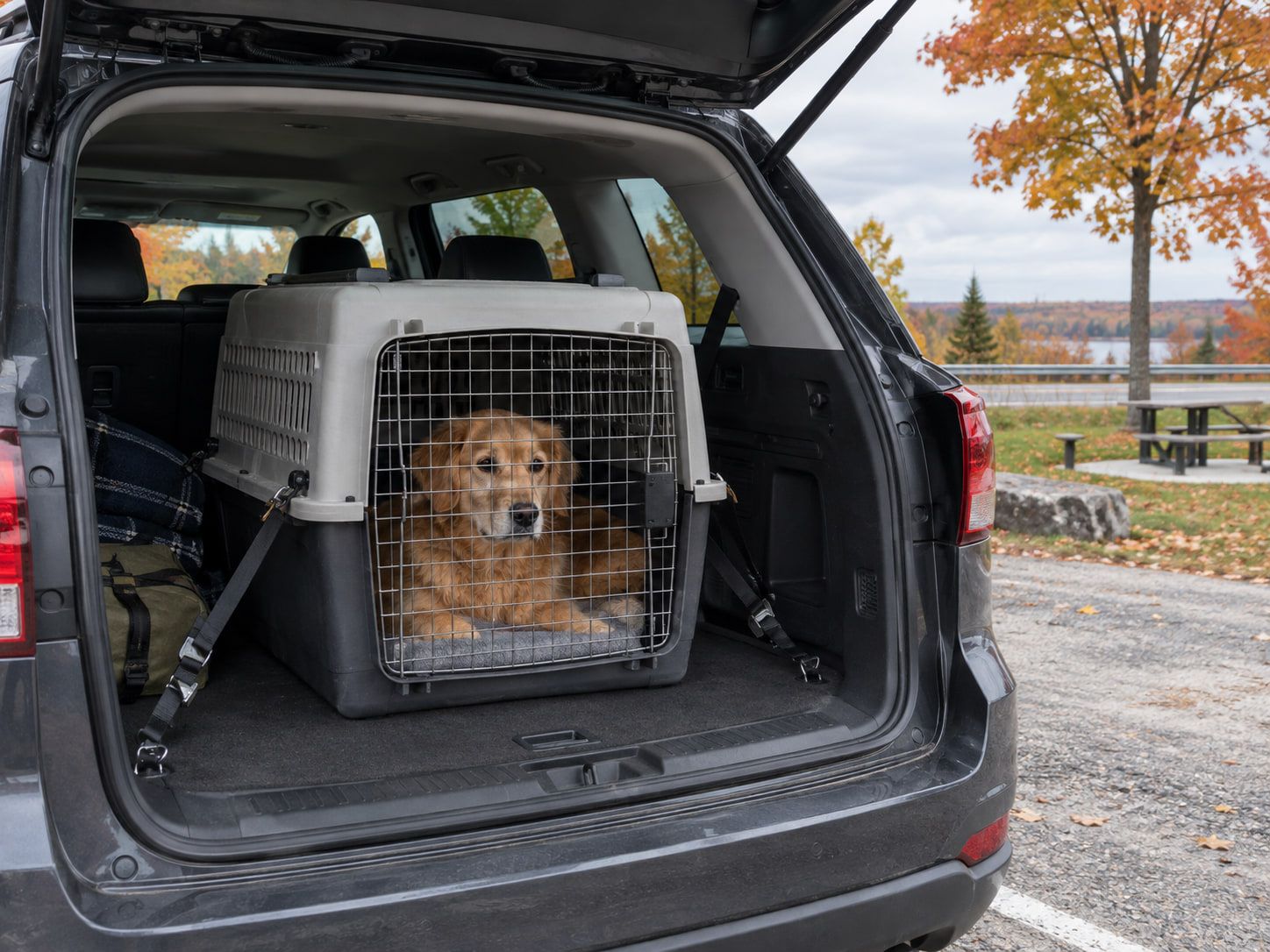
Should you drive your pet yourself or hire a pet driver?
Drive your pet yourself when you are making the same trip anyway, your pet rides well in a car, and you can give the trip enough days. People hire a pet driver when the timing does not work: they fly ahead to start a job, the movers and the closing land on the same day, nobody can take the days off, or the pet should not fly and the owner is flying.
There is no wrong answer. A pet that rides with its own family in its own car often copes well. What usually decides it is your calendar, not your pet.
What does a long drive with a dog need?
A long drive with a dog needs a secured dog, regular stops, water, and never a parked car in the heat or the cold. The Canadian Food Inspection Agency's page on transporting pets, read on October 14, 2026, gives this advice for travelling by vehicle:
- Contain your pet. A carrier fastened with a seatbelt, or, without a carrier, a harness attached to a seatbelt or a safety net, so the animal cannot move around the vehicle.
- Never in the back of a pick-up truck. The page lists escape, injury, flying debris, weather and fumes as the risks.
- Watch the weather. Never leave a pet in a parked vehicle without ventilation, and then only for very short periods, especially in hot or cold weather.
- Food, water and rest. On long trips, food and water, a liner to soak up accidents, and regular stops to check on your pet and, when you can, let them walk around.
Add a few habits of your own: the leash clipped on before any car door opens, an ID tag with your cell number, the food your dog already eats, and pet friendly hotels booked ahead rather than found at the end of a long day.
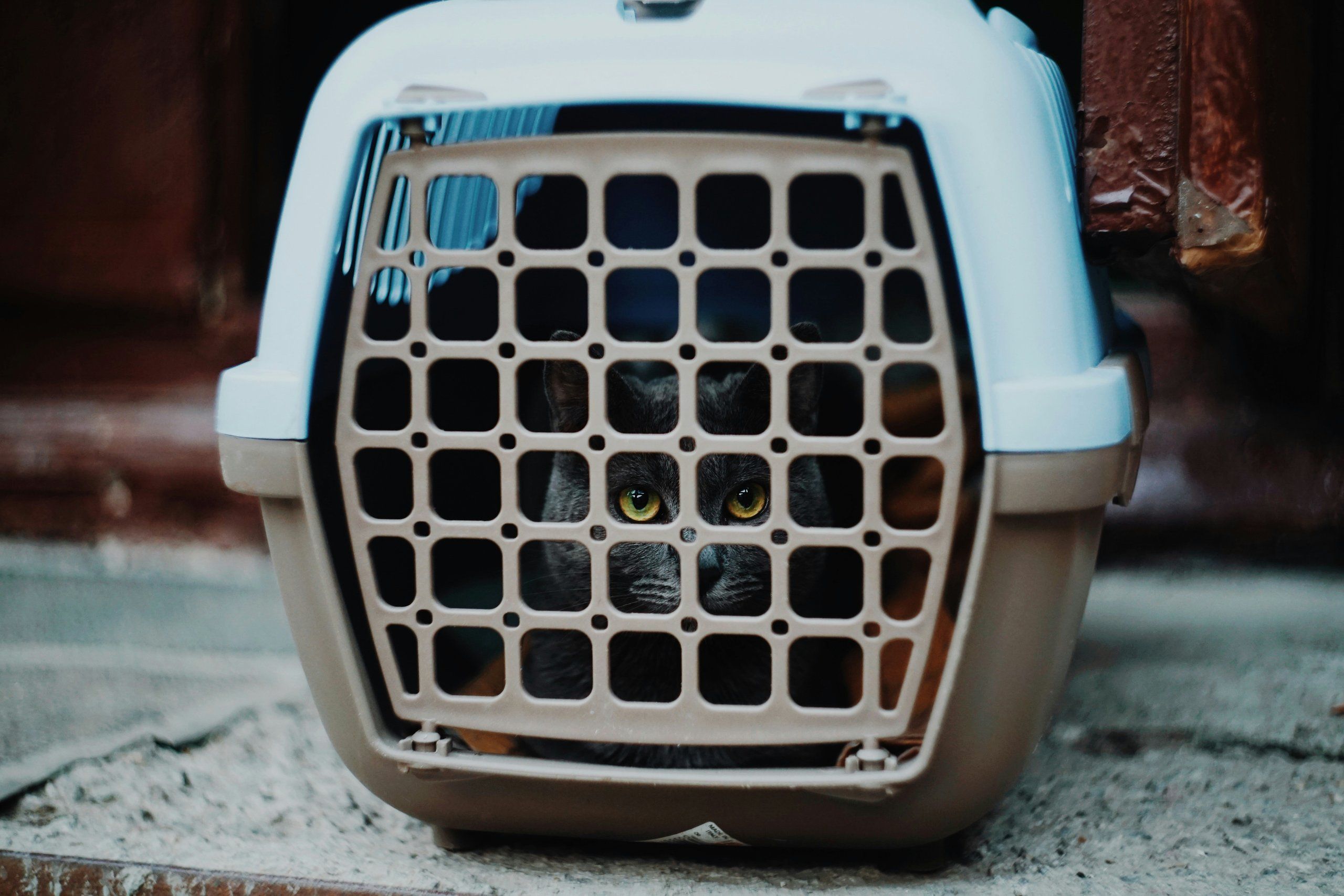
Can you travel a long distance with a cat in the car?
Yes, most cats manage a long drive in a carrier, and a carrier is where a cat is safest in a car. CFIA's page says cats are often more comfortable in a carrier, fastened with a seatbelt. A few things help:
- Bring the carrier out at home weeks before the trip and let your cat sleep in it.
- Line it with something absorbent that smells of home.
- Open the carrier only when every door and window is shut.
- At the new home, start with one quiet room: litter box, food, water and a place to hide.
Cats move with us the same way dogs do. More on cat transport.
Door to door
How does a road move with Toronto Pet Valet work?
You tell us where and when, we confirm a pickup time, and our driver collects your pet at your door and hands them over at the new one.
- 1
Get your price
Fill in the form with both addresses, your date and your pets. Some routes show a price on screen; for the rest we prepare your quote and email it to you.
- 2
Tell us about your pet
Size, temperament, health, and how they ride best: in a carrier, in a crate, or loose.
- 3
Book
We confirm the driver and the pickup time with you. Nothing is charged until then.
- 4
Pickup
The driver collects your pet at your door with their leash, carrier or crate. You get a message when they are on the way.
- 5
Arrival
The driver hands your pet over at the new door, to you or to the adult you told us about.
On the road, the driver stops for water, keeps the vehicle at a comfortable temperature and sends you updates until your pet arrives. Shorter drives often arrive the same day; longer ones can take until the next day. We confirm the timing with you before the move.
Every trip is driven by a driver we contract and hold accountable for your pet. Pets only in our vehicles: you travel separately, on the same day or a different one. Many owners send their pet once the new home is set up, or after the movers have left.
We drive pets between the Toronto area and places such as Ottawa, Montreal, Kingston, London, Windsor, Sudbury and Sault Ste. Marie, and further, by road, by air or both. See our routes.
What should you hand over with your pet?
Hand over what your pet needs for the trip and the first days after it: the leash, their food, any medicine with written doses, their records, and something that smells of home.
- A collar with an ID tag showing your cell number, and a leash.
- The carrier or crate your pet rides in, if they use one. No carrier or crate? You can borrow one of ours.
- Your pet's own food, so nothing new upsets their stomach on the trip or in the first days after it.
- Any medicine, with a written list of the drug, the dose and the times.
- A copy of the vaccine records, and the rabies certificate if your pet is crossing the border.
- A blanket or t-shirt that smells of home. Do not wash it first.
- A note of anything the driver should know: a dog that pulls on the leash, a cat that hides, a pet that gets car sick.
Does your pet ride in a crate, a carrier or loose?
It depends on the pet: on the road, pets ride in a carrier, a crate or loose, and we agree it with you before the trip. Cats are safest in a carrier. If part of the move is a flight, your pet flies in an airline approved crate, always.

Is a road move better than flying for a dog?
Sometimes. On the road there are no airline crate sizes, no holiday embargo dates and no airline breed limits, so flat-faced breeds and dogs too big for an airline crate often go by road. For a move across the country, a flight is much shorter. We plan the safest way for each pet, by road, by air or both. More on dog transport.
Can a pet driver take your dog across the US border?
Yes: we move dogs and cats door to door between Canada and the US, and we arrange customs clearance at the border. The rules come from the two governments, not from us:
- Dogs into the US. The US Centers for Disease Control and Prevention (CDC) page for dogs from dog rabies-free or low-risk countries, read on October 14, 2026, says such a dog can enter the US at any airport, seaport or land border crossing. It asks for a CDC Dog Import Form receipt, a microchip a universal scanner can read, a dog at least 6 months old, and a dog that looks healthy on arrival. CFIA's page on dogs going to the US names Canada as one of those low-risk countries.
- Cats into the US. CFIA's page on cats going to the US says a Canadian licensed vet completes any documents needed, that CFIA endorsement is not required, and that US federal and state authorities may have requirements of their own.
- Back into Canada. CFIA's page on dogs going to the US reminds owners that a dog coming home still has to meet Canada's import rules, such as a valid rabies vaccination certificate.
Puppy under 6 months? Ask us before you make plans. The full rules in both directions are on moving a pet between Canada and the US.
How much does dog transport by road cost?
Prices depend on the two addresses and your pets, so we do not publish them: fill in the quote form, and some routes show a price on screen; for the rest we prepare your quote and email it to you.
Long-distance road moves: questions
Can I ride along with my pet?
Do you do local rides to the vet, the groomer or daycare?
Can you move a flat-faced dog or cat by road?
My pet gets car sick. What should I do?
Do you move pets coming from other countries?
Last checked against the CFIA and CDC pages on October 14, 2026.
Rules change. Always check the official page before you book.
Planning a long drive for your pet?
Tell us where and when, and about your pet. Some routes show a price on screen; for the rest we prepare your quote and email it to you.